Why On-Chain Perpetuals Are Quietly Becoming the Future of DeFi Trading

Whoa! I still remember the first time I put on a leveraged position entirely on-chain—no KYC, no phone call, no latency from some off-chain matching engine. My instinct said this was the future. But, hmm… something felt off about the UX back then. At the same time, I couldn’t unsee the potential: permissionless margin, composability, and real-time risk assumptions all living in smart contracts. This piece is part note, part rant, part field guide—so stick with me.

Short version: on-chain perpetuals are finally solving problems we accepted for too long. Long version: they’re rewriting how execution, funding, and liquidity mechanics interact, and that matters for traders, liquidity providers, and builders. Okay, so check this out—there are three core threads you need to understand: how liquidity is sourced, how funding rates and oracle latency shape PnL, and how cross-protocol composability creates both opportunity and risk. I’ll be honest: I have favorites here, and some things still bug me.

First thread—liquidity. Centralized perpetuals used to win on depth. Period. But on-chain designs now use concentrated liquidity, virtual AMMs, and hybrid orderbooks to approximate deep books without custodial trade-offs. On one hand, automated market makers bring composability. On the other hand, they introduce price impact curves that feel very different from a Coinbase or Binance orderbook. Initially I thought the differences were just implementation noise, but then realized the subtle slippage profiles actually change optimal trade sizing and hedging frequency.

Here’s the thing. Execution strategy matters more than ever. Short, sharp trades can exploit impermanent-funding quirks. Longer hedges expose you to oracle drift and funding skew. On-chain perpetuals force traders to be mindful of gas, too—so trade orchestration and batching become a competitive edge. I’m biased toward solutions that minimize on-chain friction, but I’m not 100% sure which UX pattern will dominate. Still, the race to reduce friction is active and creative.

Second thread—funding mechanics and oracles. Funding is the heartbeat of perpetuals. If funding becomes unpredictable, you lose the “perpetual” part and you get chaotic PnL swings. Seriously? Yes. Different protocols approach funding with twigs and duct tape, or with elegant math. Some anchor funding to time-weighted prices, others to index prices from multiple feeds. The devil is in sampling windows and update cadence—those choices change how momentum traders and market makers behave. On-chain, oracles are both blessing and bottleneck.

On-chain oracles give transparency. They also bring latency and manipulation vectors. Initially I thought that more frequent oracle updates were always better. Actually, wait—let me rephrase that: more frequent updates reduce lag but expand attack surface and cost. On one hand you get fresher marks; on the other hand you pay more gas and invite sandwich attacks or oracle front-running. Good protocols balance cadence, aggregation, and economic incentives in a way that aligns with honest validators and keeps collusion expensive.

Third thread—composability. This is my favorite part. Composability turns isolated primitives into exponential opportunity. Imagine using a perp position as collateral for a borrow, or routing funding-paying liabilities into yield strategies across protocols. It sounds nerdy—because it is—but it’s also incredibly powerful. A trader can hedge in one protocol, open leverage in another, and earn funding differentials while capturing cross-protocol arbitrage. This is where builders win, and traders with nimble strategies thrive.

That said, composability is a double-edged sword. It amplifies risk across contracts. A liquidation mechanism that assumes a single-source oracle breaks when that oracle’s consumer stack gets complex. So developers must think holistically; traders must do the same. My instinct said, early on, that composability would self-regulate; though actually, the history of finance shows it often produces systemic blind spots before fixes appear. We’re seeing that now—somethin’ like modular risk frameworks are emerging to patch those gaps.

Let me get practical. For traders using on-chain perpetuals, here’s a working checklist I return to before entering a trade: check oracle update cadence, assess funding curve volatility over the last 24–72 hours, evaluate on-chain depth vs. off-chain aggregated depth, and simulate worst-case liquidation paths. Also, examine the settlement model—does the protocol use updatable virtual inventories or peer-to-peer matching? These architectural choices directly affect your slippage and liquidation risk. Do this consistently. Very very important.

Pro tip: when you see funding rates spike in one direction, don’t just assume it’s directional sentiment. Often it’s liquidity withdrawal or an order-flow imbalance from a large LP rebalancing. Your reaction should consider causality, not just correlation. A quick heuristic: if funding spikes and on-chain depth drops simultaneously, treat that as a liquidity event—not a pure directional read. Hmm… that subtlety saved me more than once.

Interface screenshot of a perpetual trade flow illustrating funding and oracle timing

Where hyperliquid fits into the landscape

I’ve been watching platforms that try to blend deep orderbook dynamics with AMM robustness. One approach that stands out is the way some builders optimize for low latency matching and concentrated liquidity while keeping everything fully on-chain. For a neat example of a platform pursuing that balance, take a look at hyperliquid—they’re experimenting with hybrid models that aim to reduce slippage without sacrificing provenance or composability. I’m not shilling here; I’m genuinely curious about how these hybrids will scale under stress.

Risk management matters more on-chain. You need a playbook for gas spikes, oracle downtime, and cascading liquidations. When gas spikes, your liquidation check timing shifts. When an oracle lags, mark prices diverge. And when liquidations cascade, you find out whether your chosen perp design gracefully absorbs shocks or amplifies them. On one hand, well-designed insurance funds and skewed funding structures blunt the blow. On the other hand, poorly sized insurance pools invite systemic failure. Remember, margin math is unforgiving.

Liquidity providers also face unique incentives. Traditional LPs worry about impermanent loss; perp LPs worry about directional exposure and funding capture. Some designs offer concentrated LP positions that try to neutralize directional risk via automated hedging. Others rely on professional market makers who use off-chain hedges to keep on-chain curves tight. For LPs, the question is: do you want passive yield or active returns? There’s no free lunch, and if someone tells you otherwise, seriously—be skeptical.

Now let’s talk strategy, briefly. If you’re a directional trader, consider shorter holding periods and more active hedging; funding can eat your carry if you hold through a regime change. If you’re a market maker, build flexible hedges and a nimble liquidation response; use time-weighted execution to avoid being picked off during price jumps. If you’re a vault or builder, design for graceful degradation—fallback oracles, staged liquidations, and conservative collateral factors. These patterns matter a lot.

On the UX side, we need fewer hoops. Traders shouldn’t have to manually stitch on-chain transactions into a coherent strategy. Batching, meta-transactions, and gasless relays can help. But UX fixes alone won’t solve deeper protocol design choices. Good UX amplifies good economics; it doesn’t fix bad math. So I cheer for teams bridging UX with robust on-chain risk models.

FAQ

How do on-chain perpetuals differ from centralized ones?

On-chain perpetuals trade through smart contracts and use on-chain liquidity primitives, which makes them permissionless and composable. Centralized platforms provide depth and speed but centralize counterparty and custody risk. Each model trades off different risks—custody vs. oracle vs. liquidity dynamics.

What should traders watch for most closely?

Funding rate volatility, oracle cadence, and on-chain depth during stressed periods. Also, monitor gas and the protocol’s liquidation mechanics. A tight funding window or slow oracle can turn a profitable directional position into a margin call in minutes—so plan for worst-case execution and hedging hiccups.

Are hybrid orderbooks the future?

Possibly. Hybrids try to combine orderbook granularity with AMM resilience. They can reduce slippage while keeping composability. That said, complexity increases, and complexity brings new failure modes. The winners will be those who keep designs auditable, incentive-aligned, and operationally simple where it counts.

Alright—I’ll stop pushing too many hot takes at once. This space is maturing fast, and the smartest moves are often iterative. My gut says modular, hybrid models with conservative risk parameters win the next wave. My head says watch real-world stress tests and liquidity events closely. So yeah—excited, skeptical, engaged. Let’s see how the next few quarters shake out…

Why DEX Aggregators, Smart Pair Analysis, and Real-Time Price Alerts Are Your New Edge in DeFi

Whoa! I was mid-trade the other night and something felt off about the price feed I was watching. Really? The spread blinked weirdly, and my gut tightened. My instinct said: don’t go all-in. So I paused. Then I dug into why the numbers looked wrong, and what I found changed how I watch pairs now.

Okay, so check this out—DeFi has matured, but tools lag. Medium-level dashboards give you snapshots. They do fine for casual checks. But for active traders, snapshots are dangerous. You need streams: pair-level analytics that slice across liquidity sources, slippage probabilities, and recent trade flow. On one hand, you have raw on-chain data flowing in that’s messy though actually rich; on the other hand, many aggregators smooth that richness into a pretty chart that hides risk. Initially I thought aggregation meant safety, but then I realized aggregation can obscure microstructure problems that eat your P&L.

Here’s what bugs me about many so-called aggregators: they prioritize price, not context. Hmm… price is important. But context—depth, pool composition, routing paths—that’s where you earn or lose. I’m biased, but I trade like a surgeon not a tourist. My trades often depend on tiny edge cases: a near-empty LP, a fresh token with unverified router settings, or a sandwich attack vector that popped up two blocks ago. Those things don’t show up in a single-number price. They hide in the routing decisions and the pair history.

So what do you actually watch? First: multi-source liquidity maps. Second: a clean, per-pair flow log. Third: configurable price alerts that are smart, not spammy. For each you want an aggregator that doesn’t just pick the lowest quote from one DEX; it weighs execution risk. That nuance matters. For instance, a quote might look great on chain A but require a 3-hop route across thin pools, which means slippage risk and MEV exposure.

Let me be blunt: many traders get burnt because they trust the lowest display price. Seriously? That’s like seeing a “cheapest plane ticket” that pivots through six different airports and arrives a day late. My trade logic now rejects routes that match a minimal liquidity heuristic. I set rules. They saved me more than once.

Screen capture of a DEX aggregator showing multi-pool routing and alerts

Pair Analysis: What to Measure and Why it Matters

Short version: measure the micro stuff. Medium version: measure the pool depth, recent net flow, swap frequency, top liquidity providers, and token concentration. Long version: you also want to track router approvals, token contract anomalies, and recent whales’ behavior across the pairs because those are the things that shift execution probability in subtle ways that standard price feeds miss, and when you’re running leverage, those small shifts compound quickly into big outcomes.

Pool depth is obvious. But watch distribution too. A $1M pool with 95% provided by one wallet is riskier than a $250k pool shared by hundreds. Also track the typical trade size relative to depth. If the median trade consumes 30% of the pool, then your “nice-looking” quote is fragile. I’m not saying size matters always, but it matters here. There’s also token contract flags—taxes, deflationary mechanics, transfer fees—that can turn a quoted price into a trap when your router attempts the swap. I learned that the hard way once when a “safe-looking” memecoin took 12% on transfer. Ouch.

Routing transparency is another big one. A lot of aggregators obfuscate the path. They say “best price” and call it a day. I want to know: which pools, which pairs, which blocks were used by previous large trades, and did any sandwich attacks occur recently? Tracking that gives you patterns—e.g., this LP pair sees concentrated sandwich activity after liquidity additions—and then you can avoid or hedge. My system flags pairs with repeated front-running incidents. It changes my risk appetite instantly.

One more nuance: cross-chain routing. Bridges add latency and hack risk. I prefer same-chain execution unless the edge is massive. Actually, wait—let me rephrase that: use cross-chain when you can quantify the added risk, and when your expected profit is significantly greater than the aggregated bridge risk. That requires probabilistic thinking, not just greed.

Here’s a tip I use: compute an execution confidence score for each quote. Medium sentence here. Combine: depth-weighted slippage estimate, historical execution success, MEV exposure estimate, and token contract flags. Then weight by trade size. You get a number that tells you whether to hit “swap” now, delay, or split the order. This takes a little setup, but it converts hunches into repeatable decisions.

Now, about alerts. I want smart alerts, not deafening noise. I want the tool to alert me when a pair’s risk profile changes, not when price ticks by a percent. For example, alert when a top LP withdraws, when a whale moves significant balance, or when slippage curves steepen unexpectedly. I want to be notified about changing execution probability. That’s actionable. Others send price-only pings that drown you in false positives.

Check out how some platforms embed these signals directly into their pair pages. One official reference I use often is the dexscreener official site. It’s not perfect, but the way it surfaces token trends and trading pairs helps me triage faster. I trust it for initial scans and then I layer my own analysis on top.

Something else: latency matters. If your alert system lags by even a few seconds you might miss a hole in the pool. That’s where edge compute and websocket streams help. Polling is dead for active traders. Use streams to get mempool and swap events as they happen. Oh, and by the way, if your UI is sluggish, you won’t react in time, which is why execution tooling needs to be tight from UI to RPC.

Trade execution mechanics are under-discussed. Many traders assume that aggregators will always pick the best route; however, the gas cost of a multi-hop route can eclipse the quoted price improvement. So I always simulate cost-adjusted returns. This is where a smart aggregator shines: show me the worst-case net outcome after slippage and gas. If you don’t model worst-case, you’re gambling. I prefer to know how bad things can get.

Also, taxes and tokenomics. Yeah, I’m not your accountant but you should be aware. Some tokens implement transfer fees that the aggregator’s price engine doesn’t reflect. Those fees work like hidden taxes and can flip profitable trades into losses. Double-check token contracts for special hooks before executing large swaps. I’m not 100% sure you need to inspect every contract, but for novel tokens or big sizes, do it.

Risk mitigation strategies I use often include: splitting orders, using limit orders where supported, setting dynamic slippage thresholds that widen only when execution confidence stays high, and pre-flight simulation for MEV risks. For limit orders, pick platforms that can route through multiple pools and only execute when depth supports your fill size. That avoids being filled against a ghost liquidity event.

One human quirk: I sometimes overreact to a single bad fill. I’m aware of it. So I instituted a simple rule: if two fills have unexpectedly high slippage within a 24-hour window, scale down and re-evaluate the pair for a week. That lowered my incidental losses dramatically. Little rules like that help, and they’re human—imperfect, but effective.

Quick FAQ

What makes a “smart” price alert?

Short answer: context-aware triggers. Medium answer: alerts that combine liquidity shifts, top wallet moves, slippage curve changes, and recent sandwich activity. Long answer: alerts should be configurable, low-latency, and tied to execution confidence metrics so you get notified about actionable risks rather than noise.

Can aggregators be trusted for large trades?

Depends. For smaller trades a lot of aggregators work fine. For large trades, you need deep analysis: simulate routes, consider gas, check pool concentration, and evaluate MEV risk. Personally, I prefer splitting large orders or using OTC/limit mechanisms when available.

How do I avoid MEV and sandwich attacks?

Use private RPC endpoints, consider transaction bundlers, and prefer routes with stable, deep liquidity. Also monitor mempool behavior around target pairs and avoid predictable patterns. It’s not foolproof, but layering defenses reduces your attack surface.

Alright—here’s the practical takeaway. Simple steps. One: favor aggregators that surface pair microstructure, not just price. Two: build an execution confidence metric before you trade. Three: use smart alerts for risk shifts, not price noise. Four: simulate worst-case outcomes and factor in gas and token taxes. Five: keep some humility—DeFi is dynamic and surprises are frequent. I’m not preaching perfection; I’m advocating for systems that help you trade smarter.

Hmm… trading isn’t a sprint. It’s a long sequence of imperfect choices. Sometimes you’ll be right with a gut call. Other times the numbers will bail you out. Either way, tools that integrate deeper pair analysis and smarter alerts give you clarity. I expect the next wave of aggregators to go heavy on per-pair analytics and customizable alerting—because that’s what active traders need. For now, be picky. Use streams. Protect your downside. And when in doubt, test with small sizes first. Somethin’ so simple often saves a lot of heartache…

Gestörte Verbindung: Changeprozesse versus Identifikation? Erster Human Relations-Monitor liegt vor

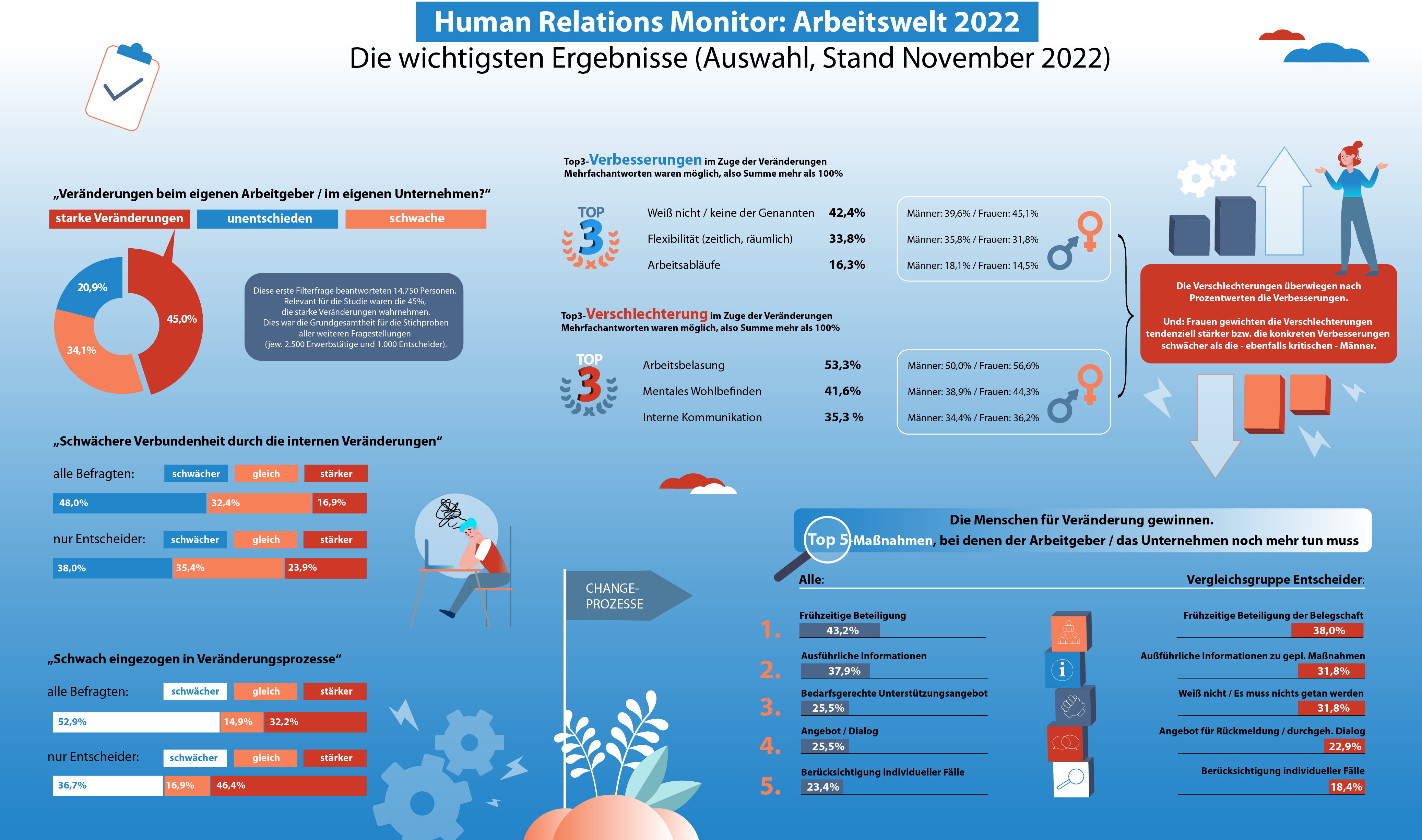
Wiesbaden/Berlin, 05. Dezember 2022. Changeprozesse haben großen Einfluss auf die Verbundenheit der Beschäftigten mit ihrem Unternehmen – und so, wie sie intern erlebt werden, eher einen schwächenden. Dies geht aus dem „Human Relations-Monitor: Arbeitswelt 2022“ von Fink & Fuchs hervor. Er untersucht den Zusammenhang von Veränderungsprozessen, Mitarbeiteridentifikation und Kommunikation. Die Online-Erhebung ist eine Kooperation mit der Deutschen Gesellschaft für Personalführung e.V. (DGFP) und Civey.

Ausgewählte Ergebnisse der Studie von 2.500 Erwerbstätigen und 1.000 Entscheidern zum Thema Mitarbeiteridentifikation in Zeiten der Transformation stellen sich wie folgt dar: Gestörte Verbindung: Changeprozesse versus Identifikation? Erster Human Relations-Monitor liegt vor weiterlesen

No news is good news – warum Menschen Nachrichten meiden

Es schneit, die Heizung läuft nicht, der Strom ist abgestellt und treffen darf man auch niemanden, weil wieder Lockdown ist: Die mediale Berichterstattung der letzten Monate hat oftmals ein düsteres Szenario vom Winter 2022 gezeichnet. Bei einem Teil der deutschen Bevölkerung hat das dazu geführt, dass sie Nachrichten vermeiden. Sei es, um damit negative Stimmungen abzuwehren, oder weil sie vielen Menschen zu kompliziert aufbereitet sind. Neue Zahlen zeigen: Gerade die junge Zielgruppe hat oft keine Lust auf News. No news is good news – warum Menschen Nachrichten meiden weiterlesen

“Alexa für Alle” gewinnt den PR Report Award 2022

Der Jubel am vergangenen Donnerstag war groß! Gemeinsam mit Amazon Devices haben wir den PR Report Award 2022 in der Kategorie “Technologie und Innovation” gewonnen. Herzlichen Glückwunsch an unseren Kunden Amazon Devices und alle Mitarbeiter:innen, die an diesem Erfolg mitgewirkt haben. Es ist der verdiente Lohn für ein wirklich tolles Projekt, dass gerade erst in den Startlöchern steht. Die Freude über den PR Report Award wiegt gleich viel stärker, wenn man einen Blick auf die starke Konkurrenz in diesem Jahr wirft. “Alexa für Alle” gewinnt den PR Report Award 2022 weiterlesen

Focused Energy: Kommunikation für die „Energie der Zukunft“

Fink & Fuchs verzeichnet Kundenzuwachs im Deep-Tech-Sektor: Seit April berät die Agentur für Technologie- und Innovationskommunikation das junge deutsch-amerikanische Unternehmen Focused Energy. Ansässig in Darmstadt und Austin/Texas will Focused Energy ab Mitte der 2030er Jahre auf der Basis von laserbasierter Kernfusion eine sichere, saubere und schier unerschöpfliche Energieerzeugung ermöglichen. Focused Energy: Kommunikation für die „Energie der Zukunft“ weiterlesen

Premium Traineeship bei Fink & Fuchs; „wir beraten anders“ … Staging, Storytelling und innovative Kreativtechniken

Nach einem mehrstufigen Auswahlverfahren startet der 22. Traineejahrgang bei den Wiesbadener Kommunikationsexperten mit fünf Hochschulabsolvent:innen. In ihrer 15-monatigen Weiterqualifizierung zum/r Kommunikationsberater:in bei der Fink & Fuchs AG sammeln sie Erfahrung im Training-on-the-job, flankiert von abwechslungsreichen theoretischen Modulen mit Schwerpunkt Account Management und Beratung. Besonderen Wert legt Fink & Fuchs dabei auf die Ausprägung und Weiterentwicklung der jeweiligen Beraterpersönlichkeit. Das Programm nutzt dafür Elemente der Bühnenausbildung, schult den Umgang mit Kundenbedürfnissen und unerwarteten Situationen. Die Hochschulabsolvent:innen trainieren, wie man Geschichten spannend erzählt, beim Kunden mit innovativen Kreativtechniken punktet und wie erfolgreiches Networking funktioniert.  Premium Traineeship bei Fink & Fuchs; „wir beraten anders“ … Staging, Storytelling und innovative Kreativtechniken weiterlesen

Goldene Lilie 2022: Fink & Fuchs erneut für soziales Engagement ausgezeichnet

Logo Golde40 Unternehmen aus Wiesbaden sind am Montag, den 10. Oktober 2022 in der Landeshauptstadt mit der „Goldenen Lilie 2022“ ausgezeichnet worden. Vor rund 100 Gästen aus Wirtschaft und Stadtgesellschaft ehrten Stadtrat Christoph Manjura und UPJ- Vorstand André Koch-Engelmann die Preisträgerinnen und Preisträger. Ein Grußwort hielt der Wiesbadener Oberbürgermeister Gert-Uwe Mende. Die Goldene Lilie ist eine Säule der Strategie WiesbadenEngagiert! des Amtes für Soziale Arbeit der Landeshauptstadt Wiesbaden und eine gemeinsame Initiative mit dem UPJ Netzwerk für Corporate Citizenship und CSR.

Viele Wiederholungstäter

„Viele Preisträger erhalten die Goldene Lilie zum wiederholten Mal. Das zeigt, dass die Übernahme sozialer Verantwortung für die Unternehmen eine Selbstverständlichkeit ist und keine kurzfristige Aktion, nur um das eigene Image zu verbessern“, so André Koch- Engelmann. „Außerdem zeigen die Preisträger sehr eindrücklich, dass es eben nicht nur die großen Industrieunternehmen sind, die sich engagieren. Sondern auch die kleine Handwerksfirma, der selbständige Kreativunternehmer und der familiengeführte Mittelständler.“

Lokales Engagement von Fink & Fuchs

Nachdem Fink & Fuchs bereits in den vergangenen Jahren mehrfach mit der Goldenen Lilie ausgezeichnet wurde, folgt nun die siebente Auszeichung für soziales Engagement im Raum Wiesbaden.

Goldene Lilie 2022: Fink & Fuchs erneut für soziales Engagement ausgezeichnet weiterlesen

Fake und Vertrauen: So konsumieren deutsche Onliner heute Medien

Wo finden Menschen ihre Informationen? Wie wählen sie Nachrichten aus? Und wie sehr vertrauen sie diesen? Das sind Fragen, die der Digital News Report 2022 des Reuters Institute weltweit und auch für Deutschland beleuchtet hat. Als Tendenz zeigt sich: Eine wachsende Zahl an Menschen versucht, Nachrichten zu vermeiden. Insgesamt sinkt das Interesse an News – das Vertrauen in etablierte Medienmarken ist aber gerade im internationalen Vergleich nach wie vor hoch, auch wenn sich der pandemiebedingte Sprung wieder etwas abgenutzt hat. Fake und Vertrauen: So konsumieren deutsche Onliner heute Medien weiterlesen

Electrifying Ideas: ZVEI beauftragt Fink & Fuchs mit neuem Markenauftritt

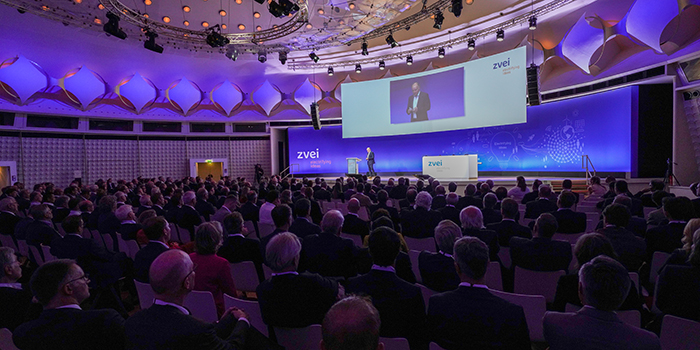
Fink & Fuchs unterstützt den ZVEI bei seinem Marken-Relaunch. Die Agentur für integrierte Kommunikation hat zunächst das Corporate Design für den neuen Markenauftritt entwickelt und wird den Verband der Elektro- und Digitalindustrie auch mit begleitenden PR-Maßnahmen unterstützen.

ZVEI JK 17052022 HR 219
Cedrik Neike, Mitglied des Vorstands, Siemens AG und ZVEI-Vizepräsident,
Jahreskongress des ZVEI 2022

Das neue Corporate Design wurde auf dem ZVEI-Jahreskongress in Berlin offiziell vorgestellt. Es war gleichzeitig der Auftakt für die Neupositionierung eines der größten Industrieverbände Deutschlands. Inhaltlicher Leitgedanke, der sich in dem neuen Markenauftritt und in sämtlichen Kommunikationsmitteln widerspiegelt, ist die Vision einer All-Electric Society. Die daraus abgeleitete Mission lautet: Durch konsequente Elektrifizierung und Digitalisierung den Wandel zu einer klimaneutralen Gesellschaft voranzutreiben. Der neue Markenauftritt veranschaulicht, wofür der ZVEI eintritt und wie seine sieben Leitmärkte und vier Leitthemen auf diese Vision einzahlen. Electrifying Ideas: ZVEI beauftragt Fink & Fuchs mit neuem Markenauftritt weiterlesen